





Spelling Shed Guidance
In 2017, Spelling Shed was launched as a standalone app available for Apple and Android devices by founders Rob Smith and Martin Saunders. Soon afterwards, it became the #1 spelling app in the UK and across a range of other territories. In 2019, we added the first version of our spelling scheme which included a weekly spelling lesson and teaching resources. This proved popular and now well over 20 million children around the world have had access to Spelling Shed resources. Over the past half a decade, we have continued to research the best spelling principles and pedagogical practices leading us to develop a new Spelling Curriculum. This curriculum incorporates the latest findings in effective spelling instruction and is designed to enhance students’ spelling abilities in a comprehensive manner. A dedicated curriculum tailored specifically for Australia has been meticulously crafted and developed to support children in this region.
What is included in a Spelling Shed lesson?
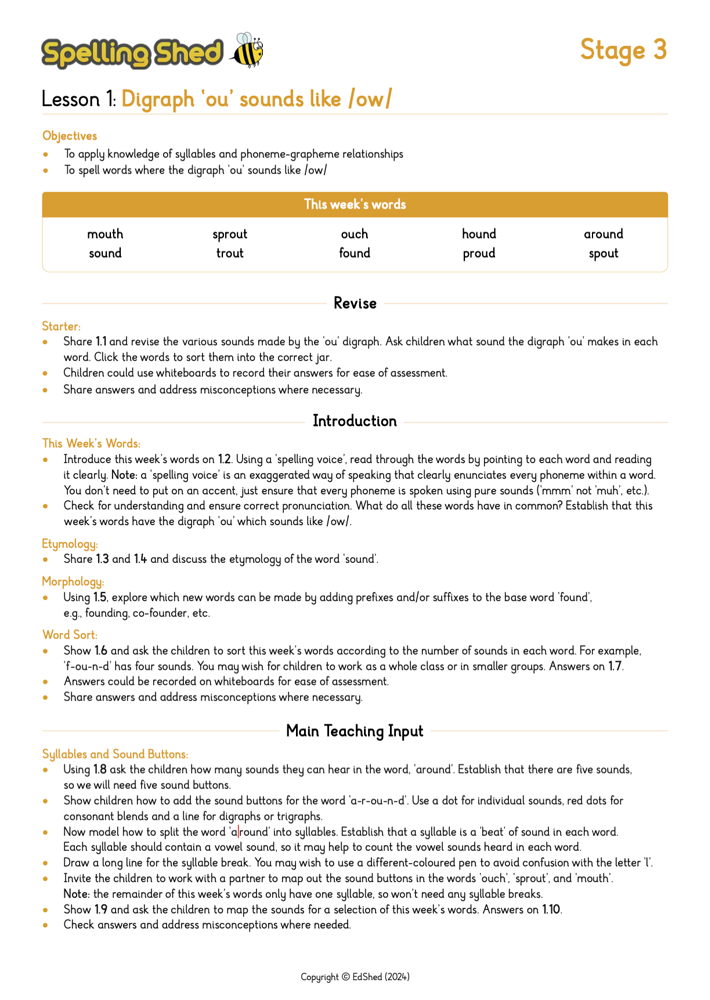
We know how busy school timetables can be, so we’ve designed our lessons with flexibility in mind. Each lesson includes carefully structured sections that can be taught as a complete lesson or divided into shorter sessions throughout the week. For example, you may decide to split the lesson into three smaller sections:
- 1: Revise and Introduction
- 2: Main Teaching Input
- 3: Independent and Consolidation Activities
This approach allows teachers to revisit and reinforce key concepts, supporting the ‘spaced and retrieval’ practices shown by research1 to strengthen long-term learning.
Each Spelling Shed lesson follows a clear, consistent structure designed to make spelling meaningful, engaging and easy to teach. The sequence supports explicit instruction, opportunities for practice, and meaningful exploration of how words work.2
Objectives
Each lesson has an objective drawn directly from the Australian Curriculum Version 9. This ensures every session is purposeful, targeted and aligned with national expectations for spelling, phonics and word study.
Revise
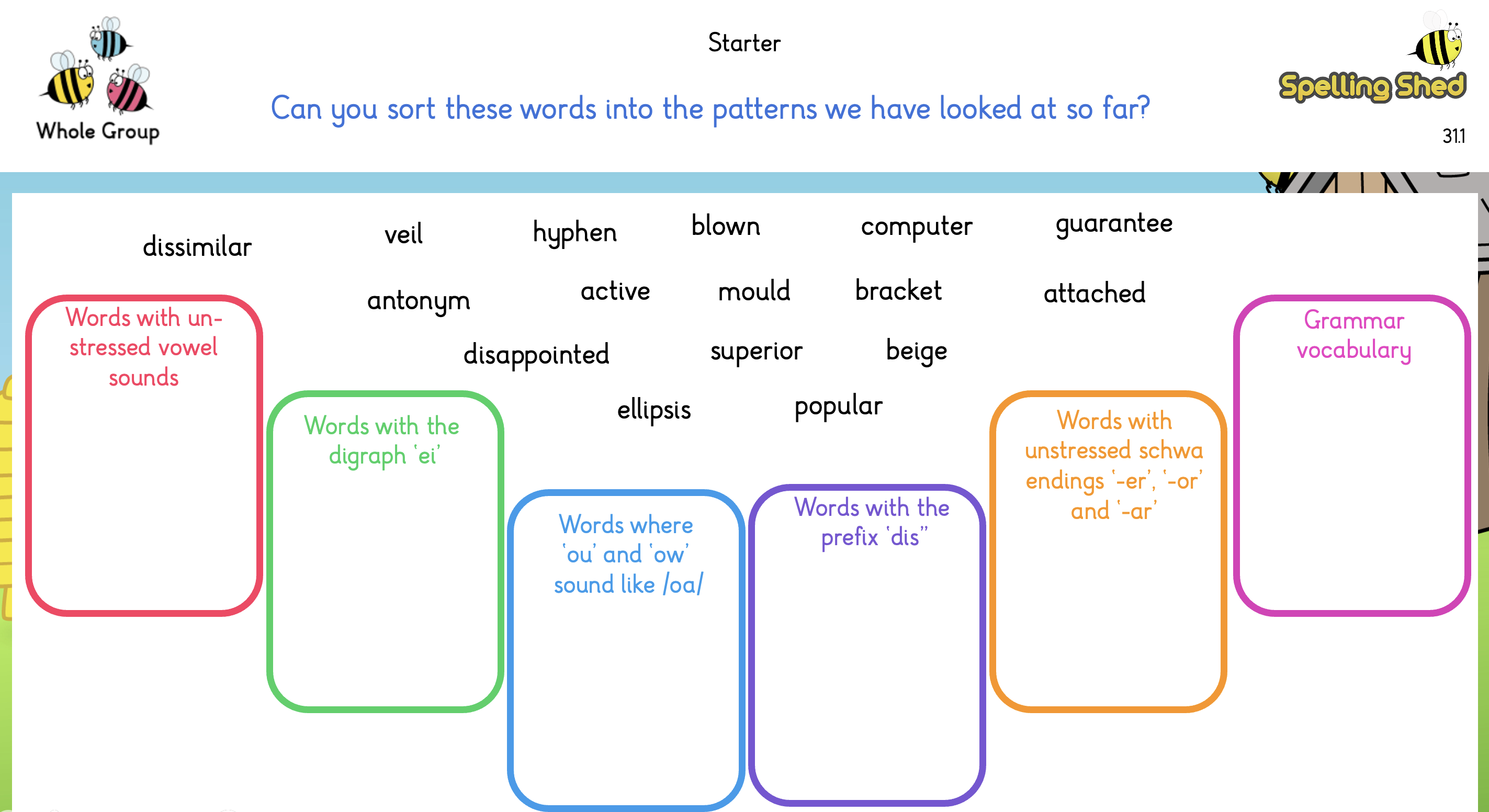
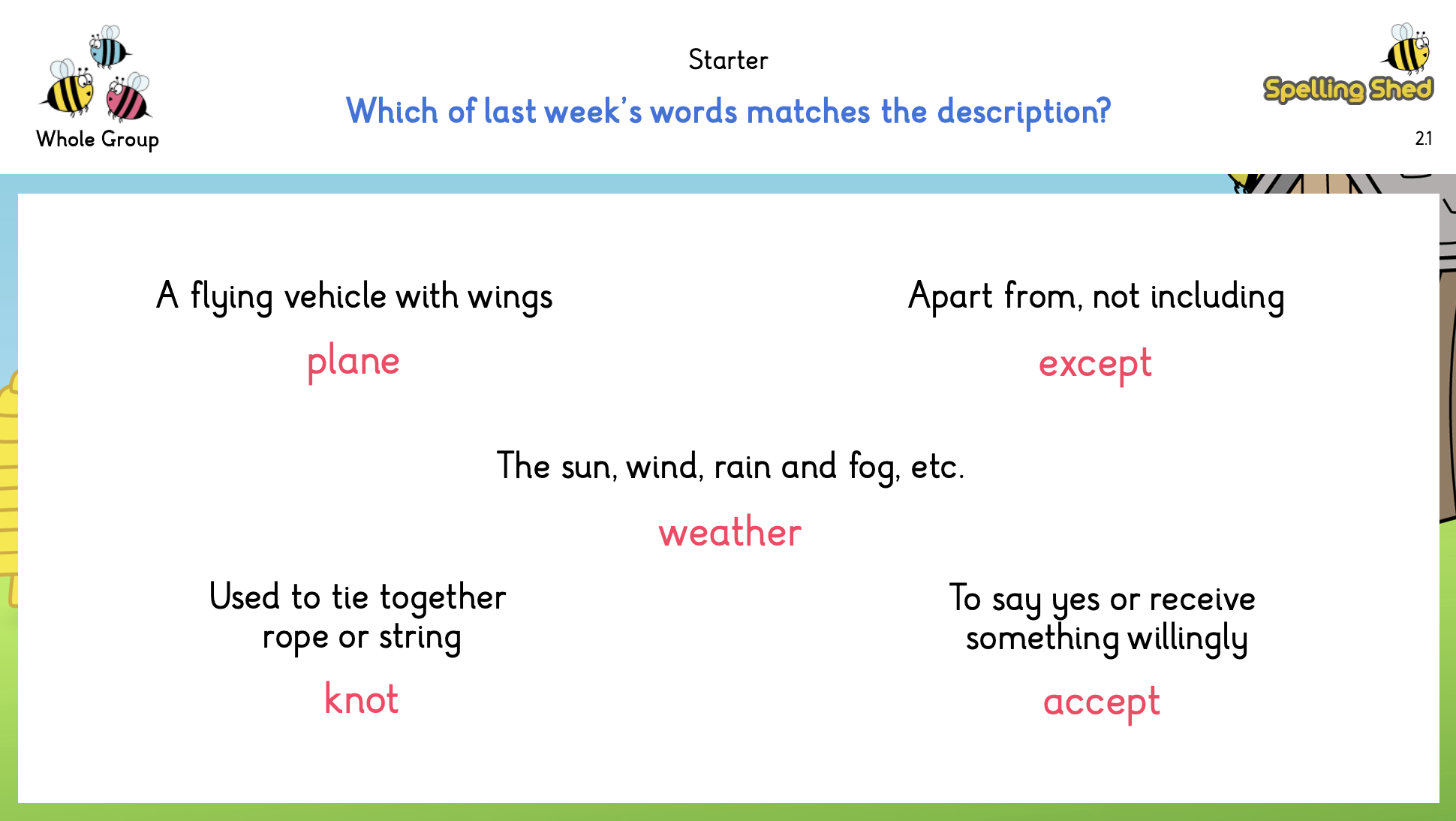
Children begin with a whole-class review of words and concepts from previous lessons. This regular review strengthens retrieval and long-term memory, helping students make lasting connections between sounds, patterns and meanings. Revision may include words from the previous week or earlier stages of the programme to reinforce cumulative learning. Here, misconceptions can be easily identified and addressed in a low-stakes environment.
Introduction
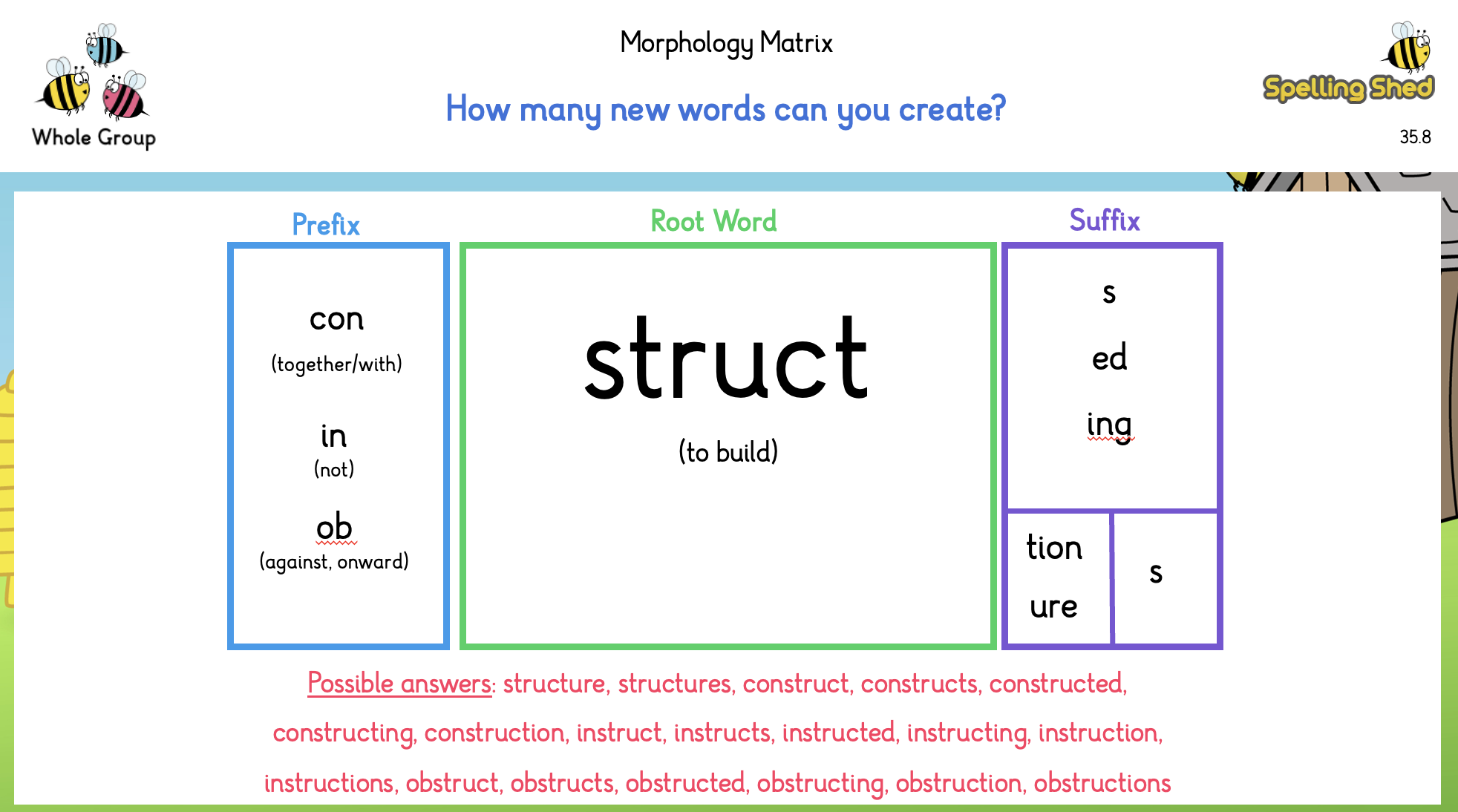
New focus words are introduced in context. Together, children and teachers explore spelling patterns, look for shared features and discuss what the words mean.
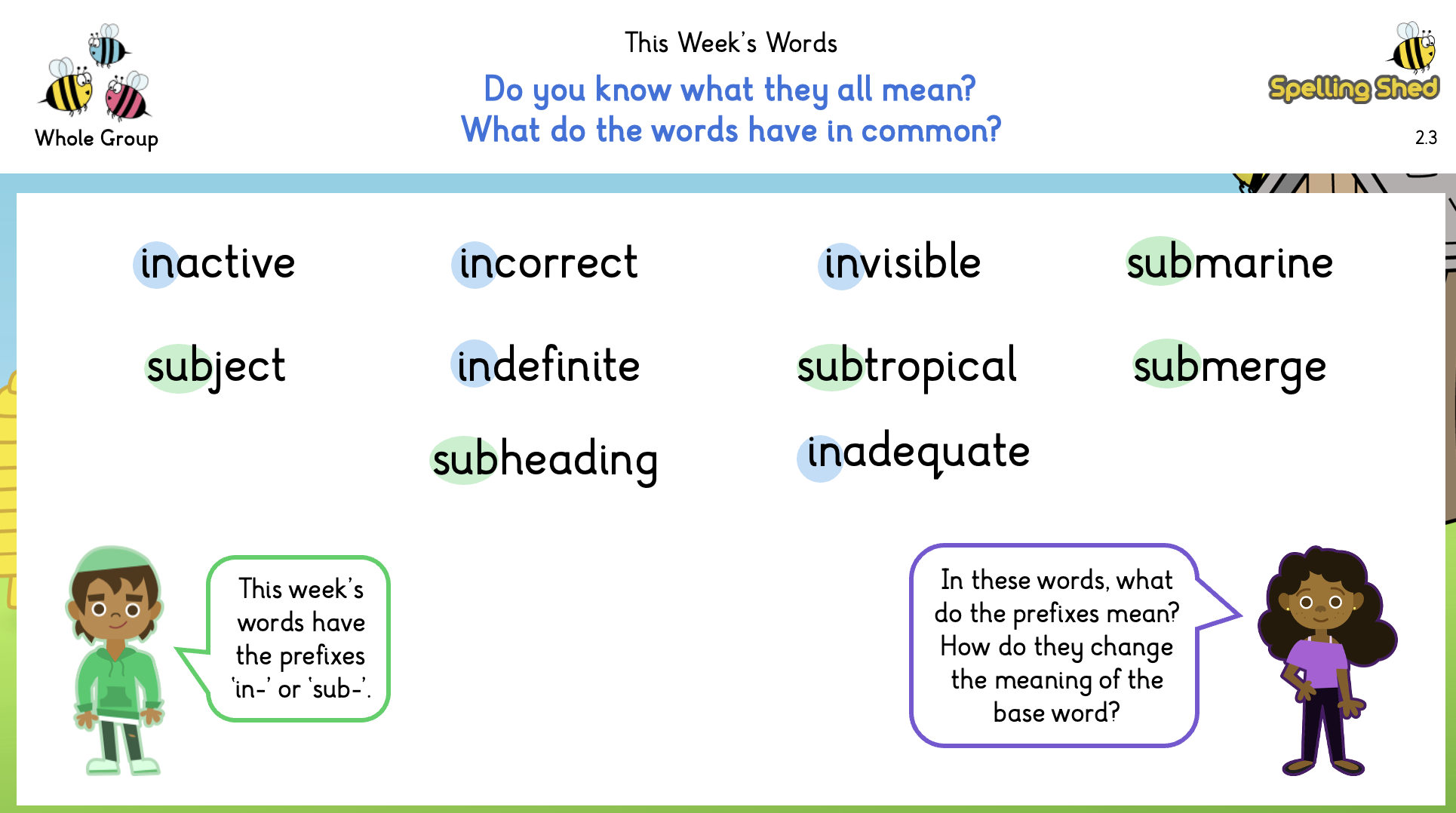
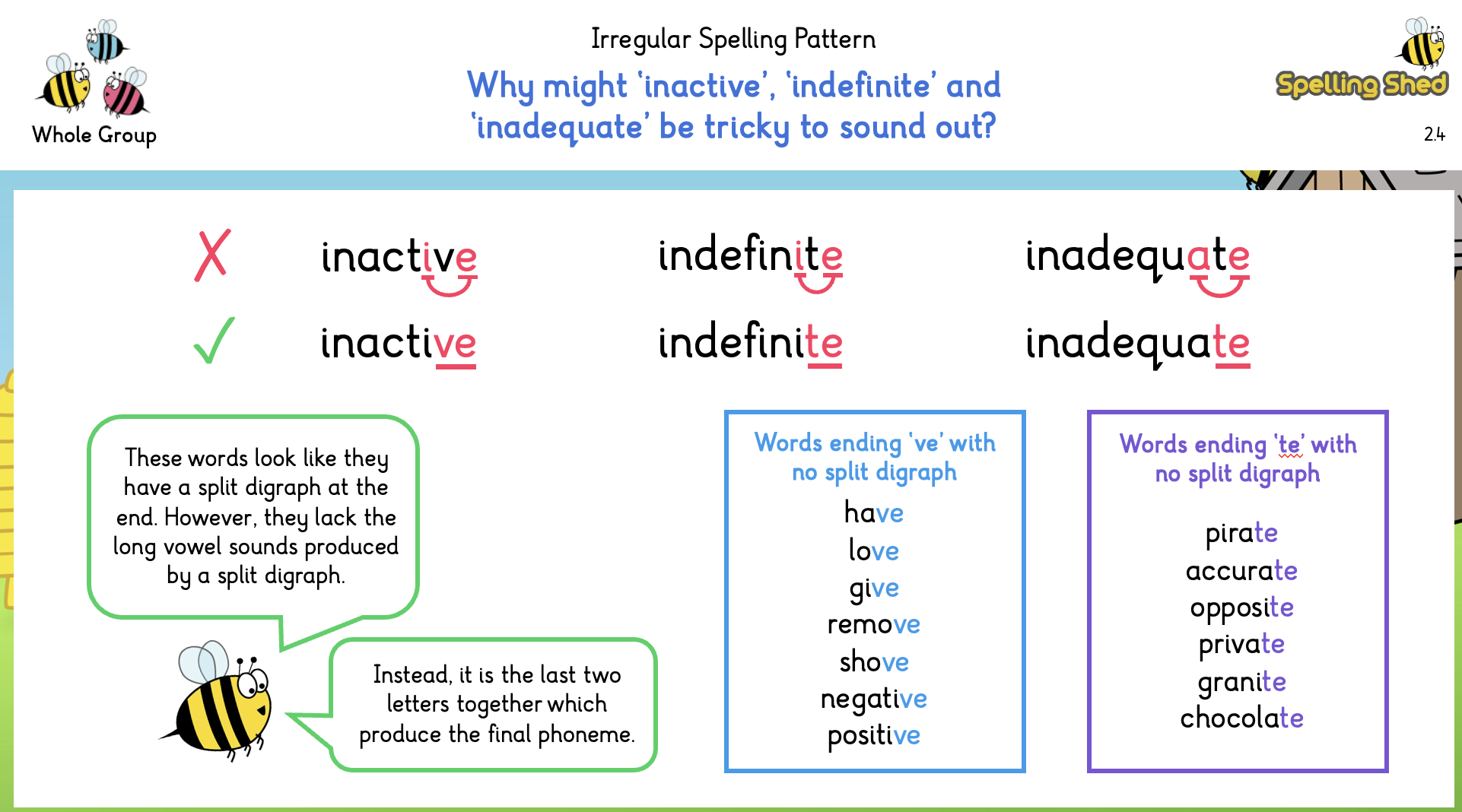
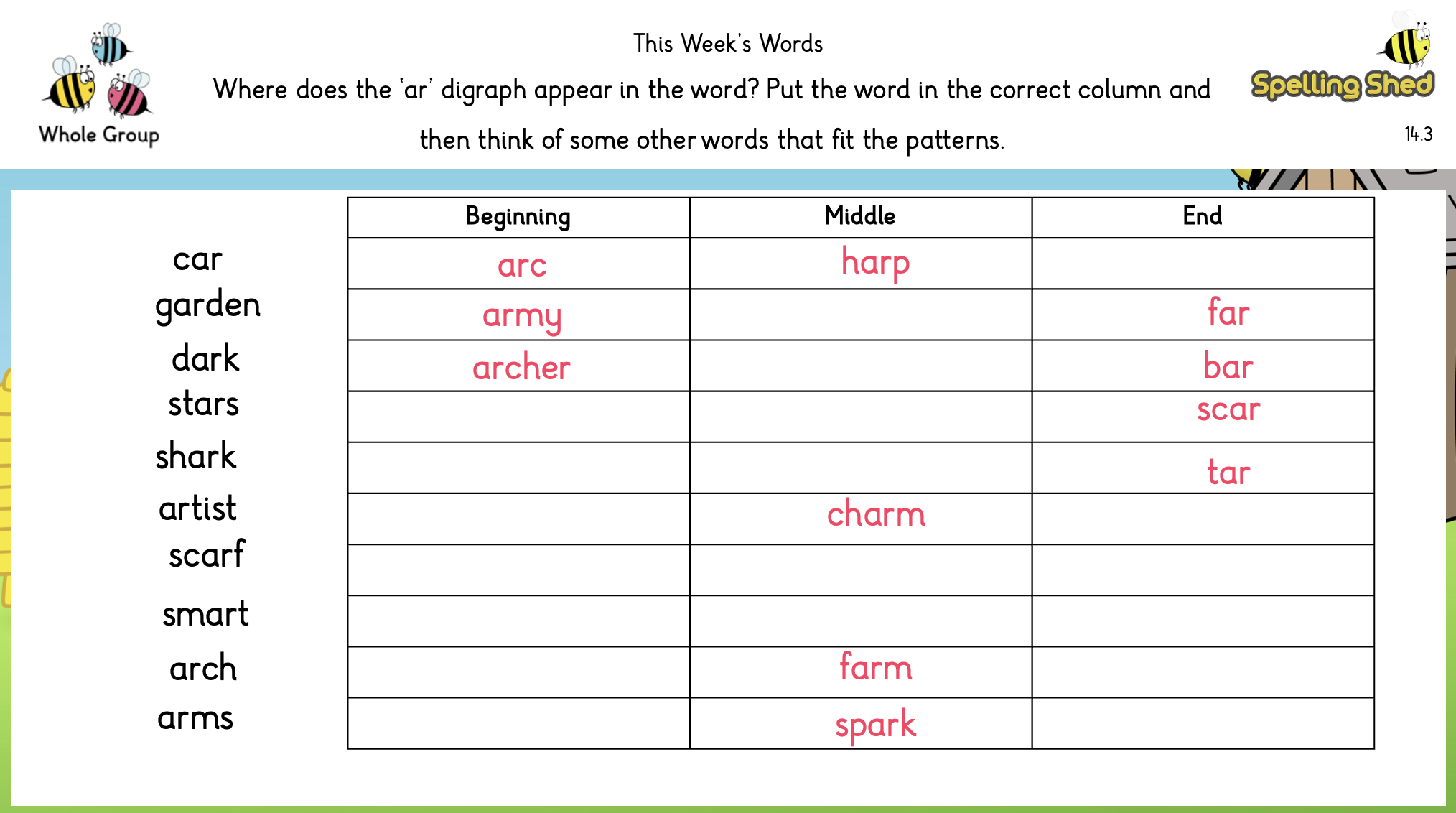
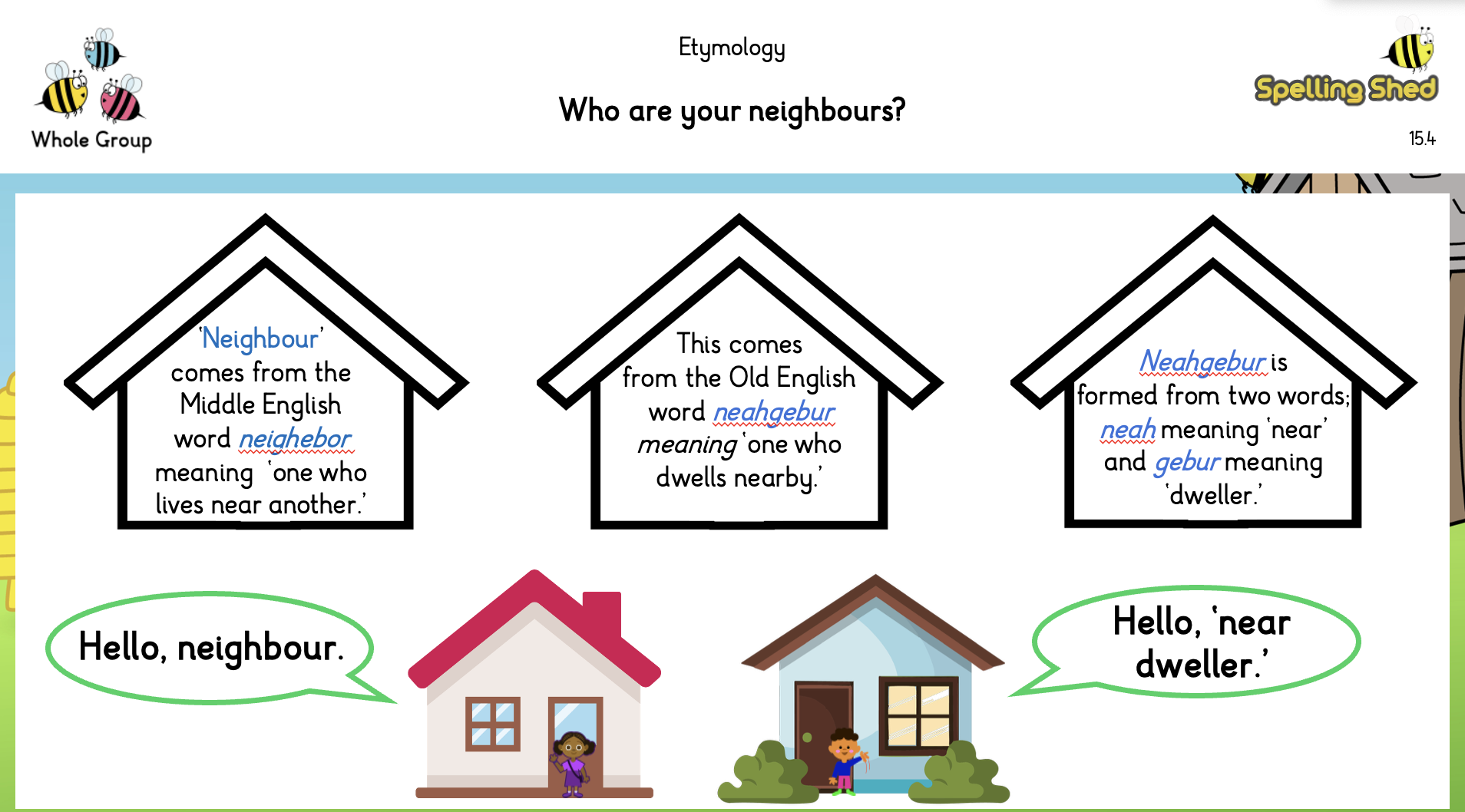
Etymology, morphology, discussing irregular spelling patterns and word sorts are woven throughout this section to help students see spelling as logical and connected.3
Main Teaching Input
In this section, words are studied in more depth. Students investigate how many syllables and phonemes each word contains and practise mapping these sounds using sound buttons and later sound boxes. This hands-on approach deepens phonological awareness and strengthens the link between spoken and written language.4


Independent Tasks
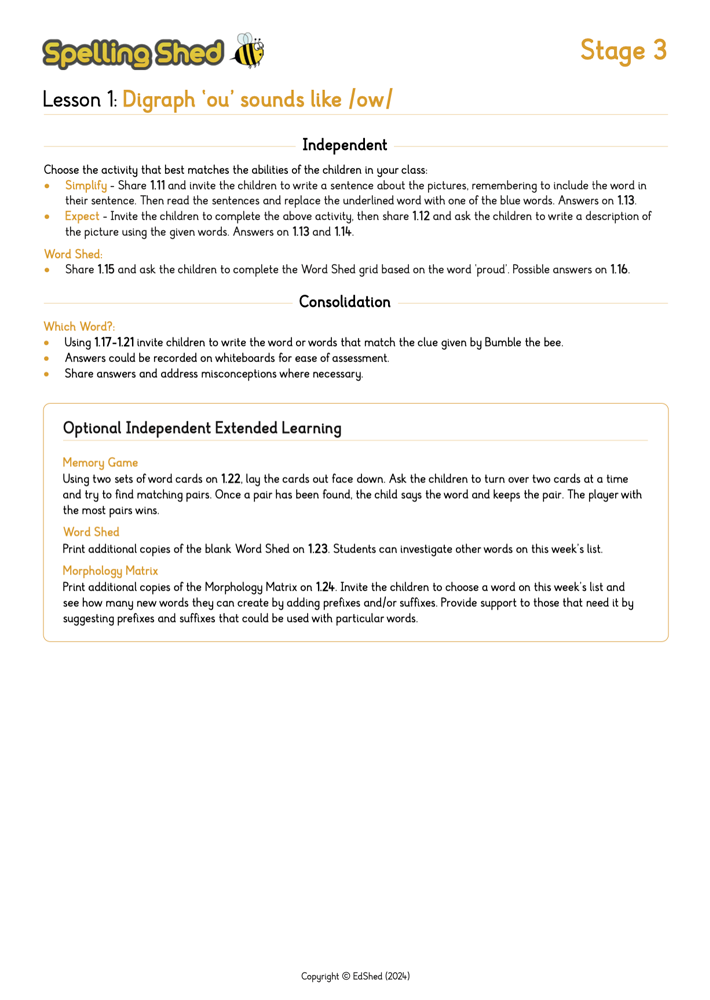
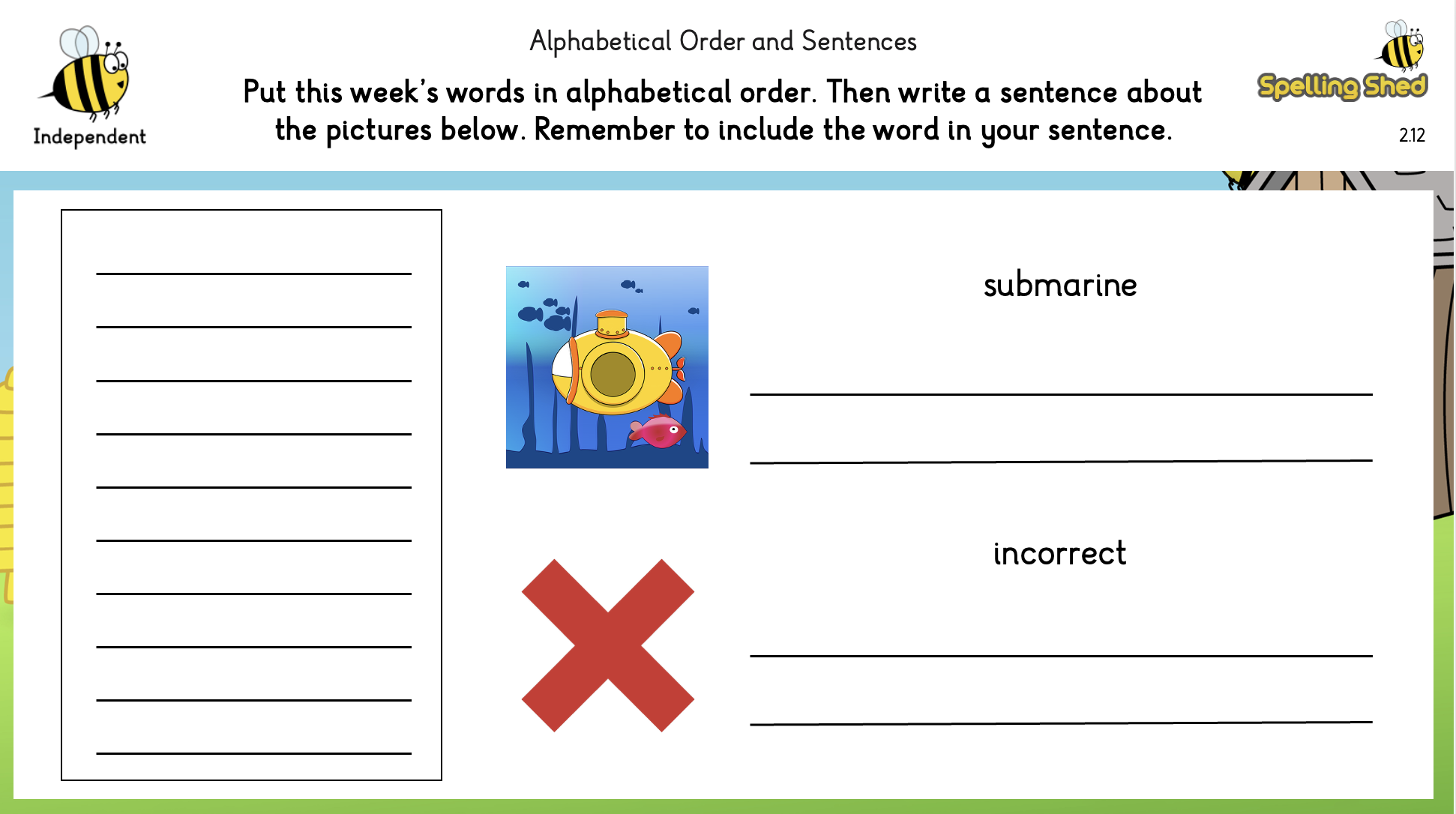
Differentiated activities give students the chance to apply what they’ve learned. Tasks may include identifying missing graphemes, writing sentences with target words, or writing the correct word next to its definition. These activities help teachers provide the right level of challenge for each learner.5


Consolidation
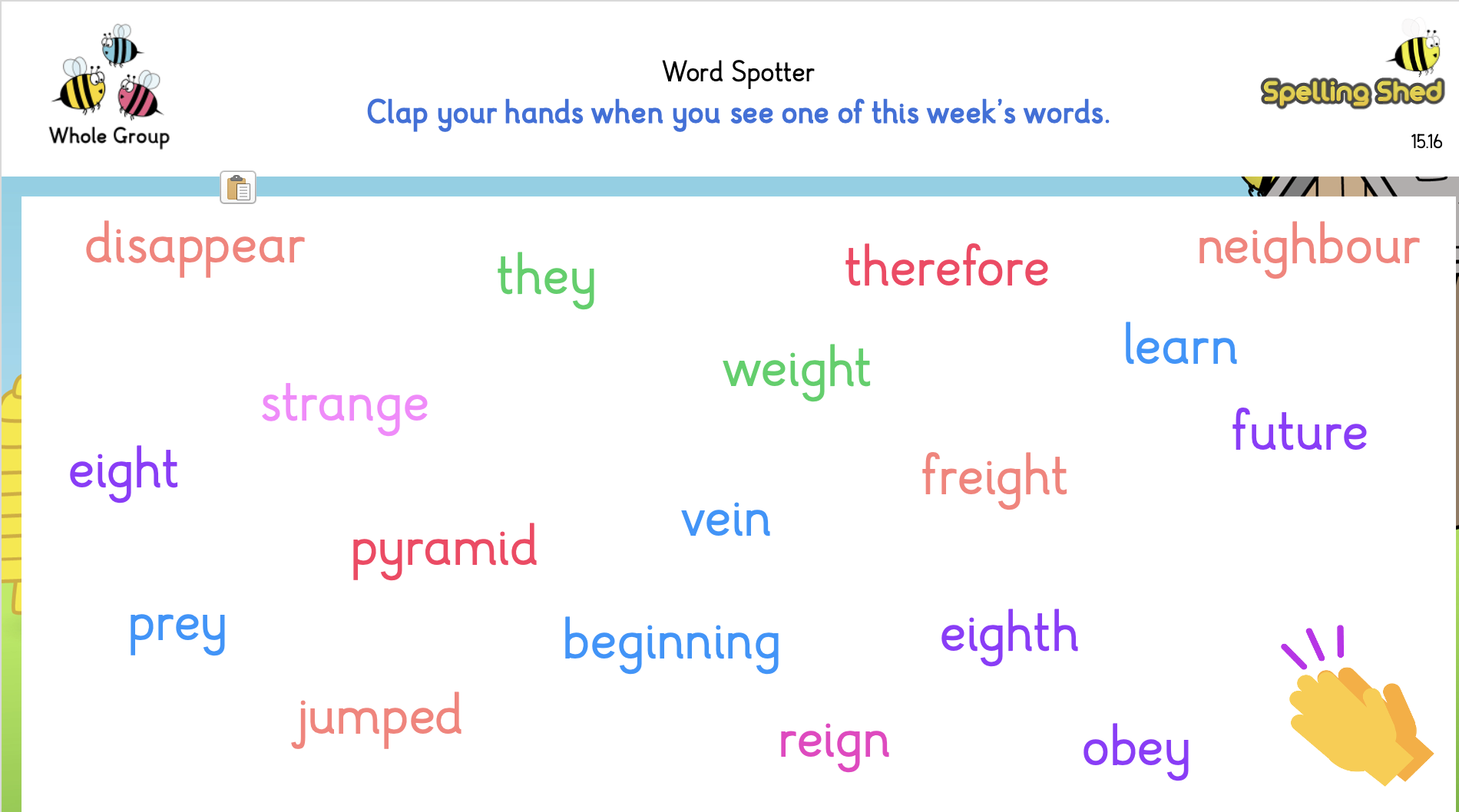
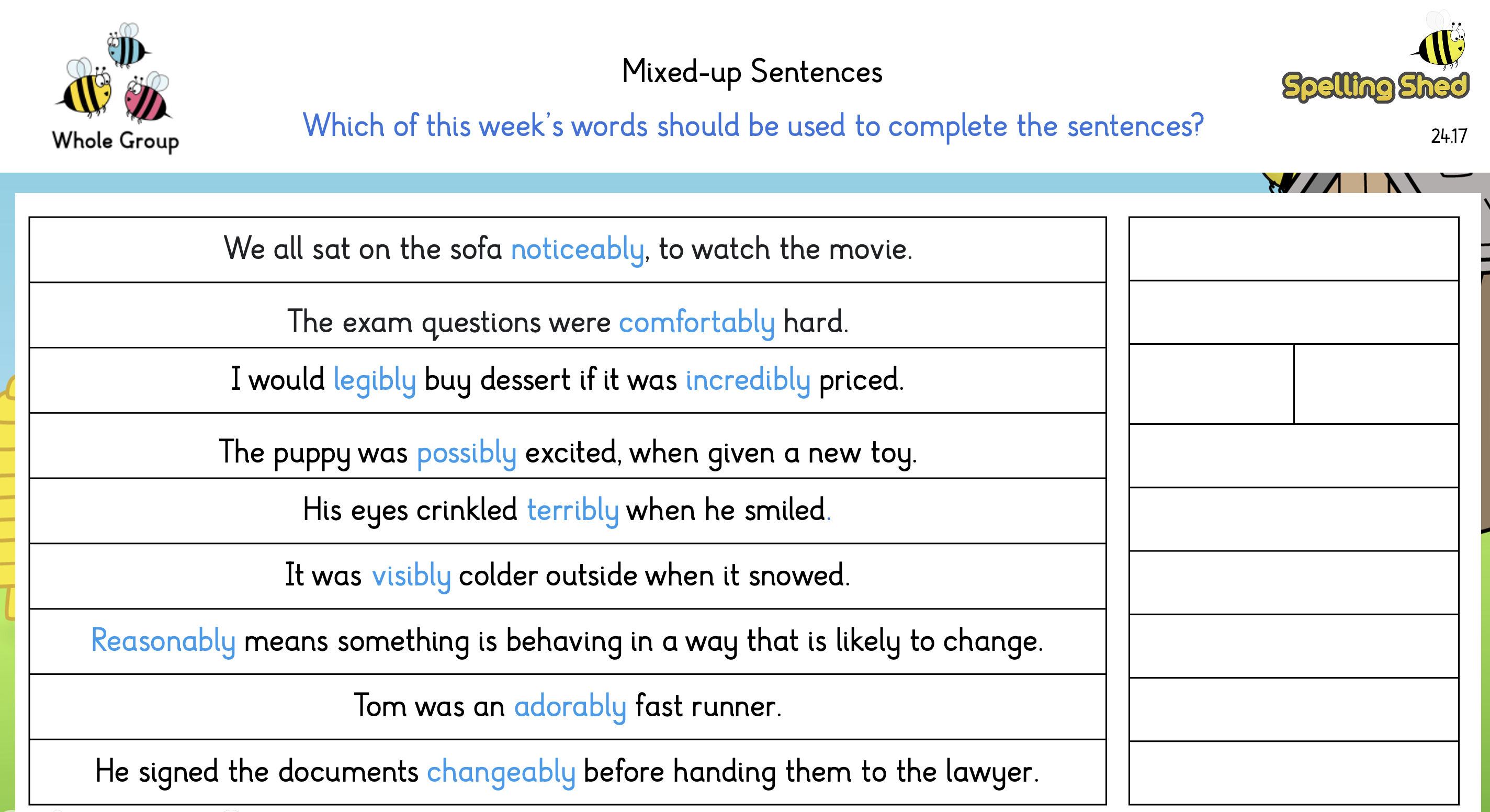
This section brings the learning together. Through short, engaging group activities such as missing word sentences, mixed-up sentences or ‘word spotter’ challenges, students practise using the skills learned in the lesson. These activities can be used to assess understanding at the end of a lesson, enabling teachers to identify any gaps and address misconceptions.

Lesson Sequence
The lesson sequence is planned to systematically build upon acquired knowledge, so we recommend that teachers start with Lesson 1 in their stage and move through the lessons in the order that they are presented.
Independent Extended Learning Ideas
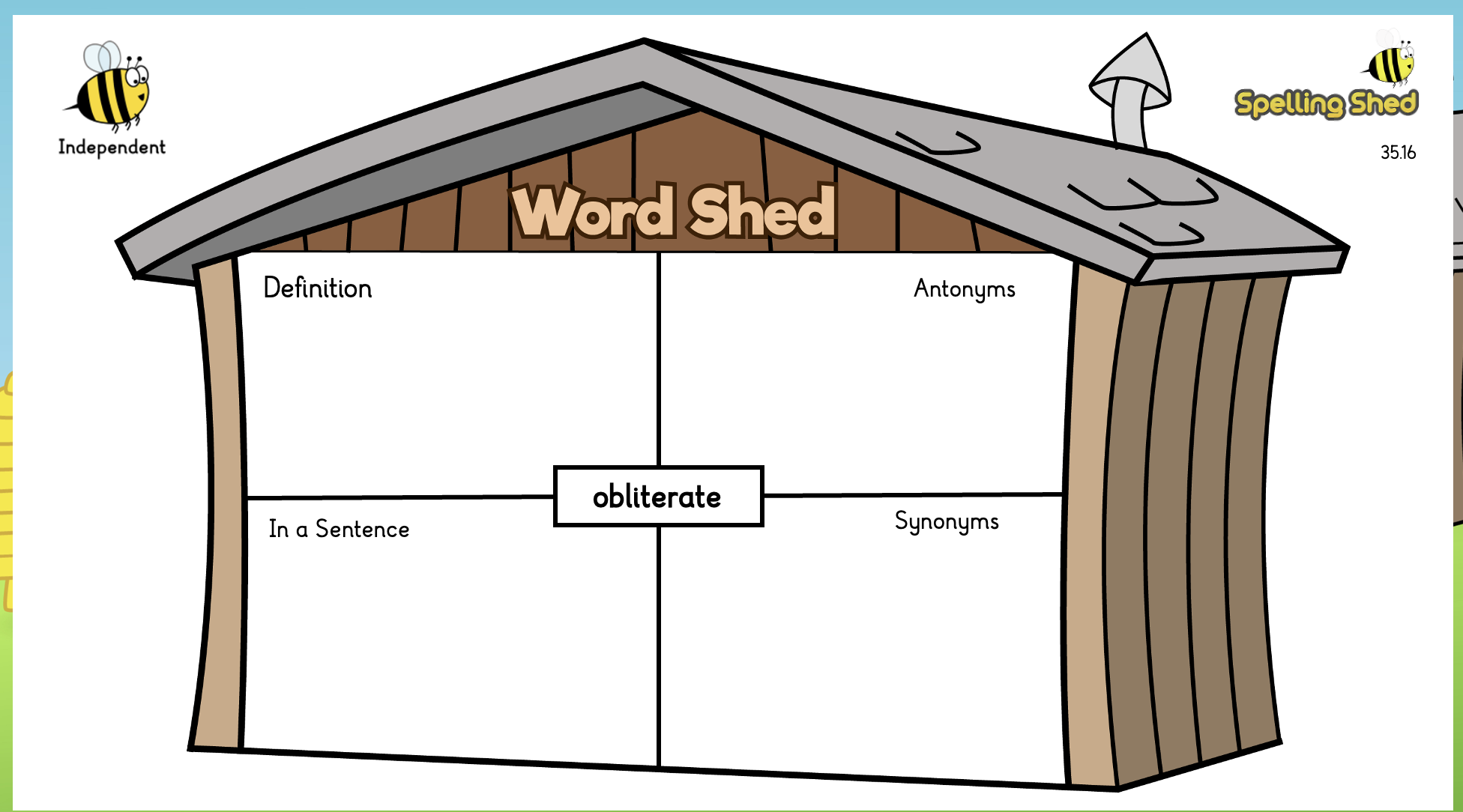
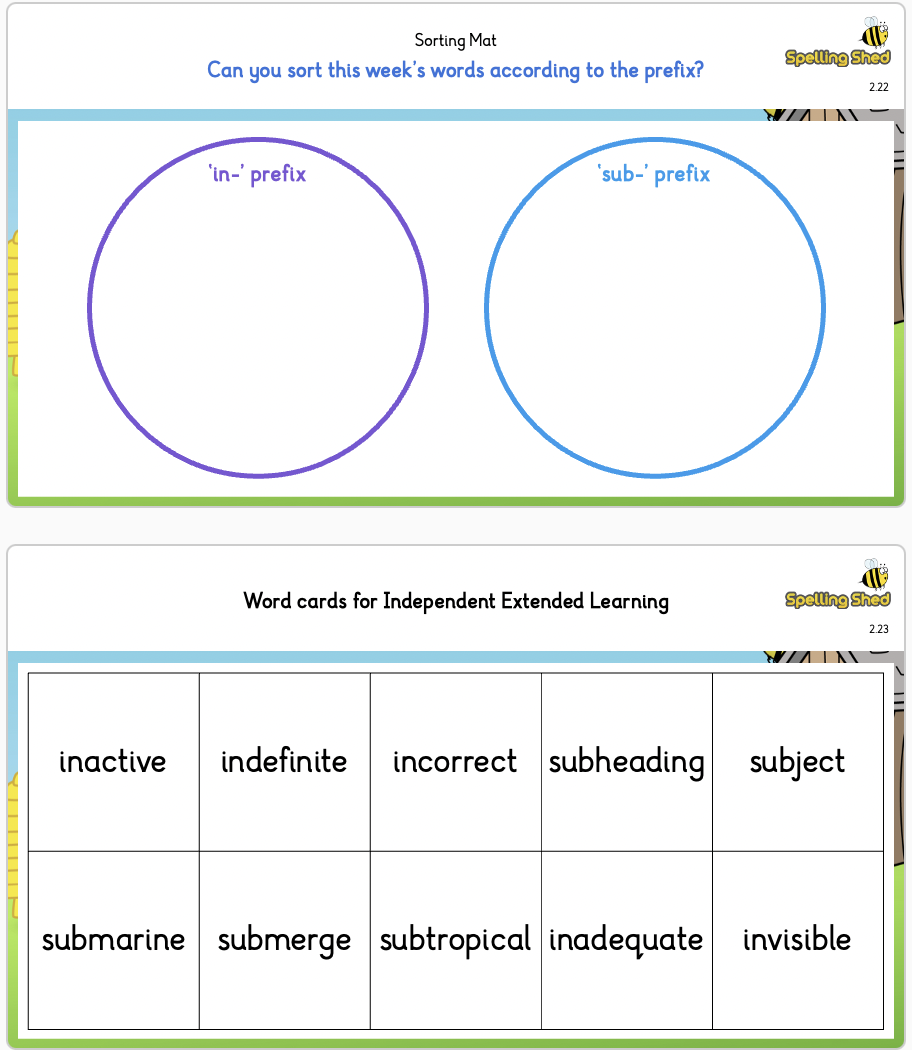
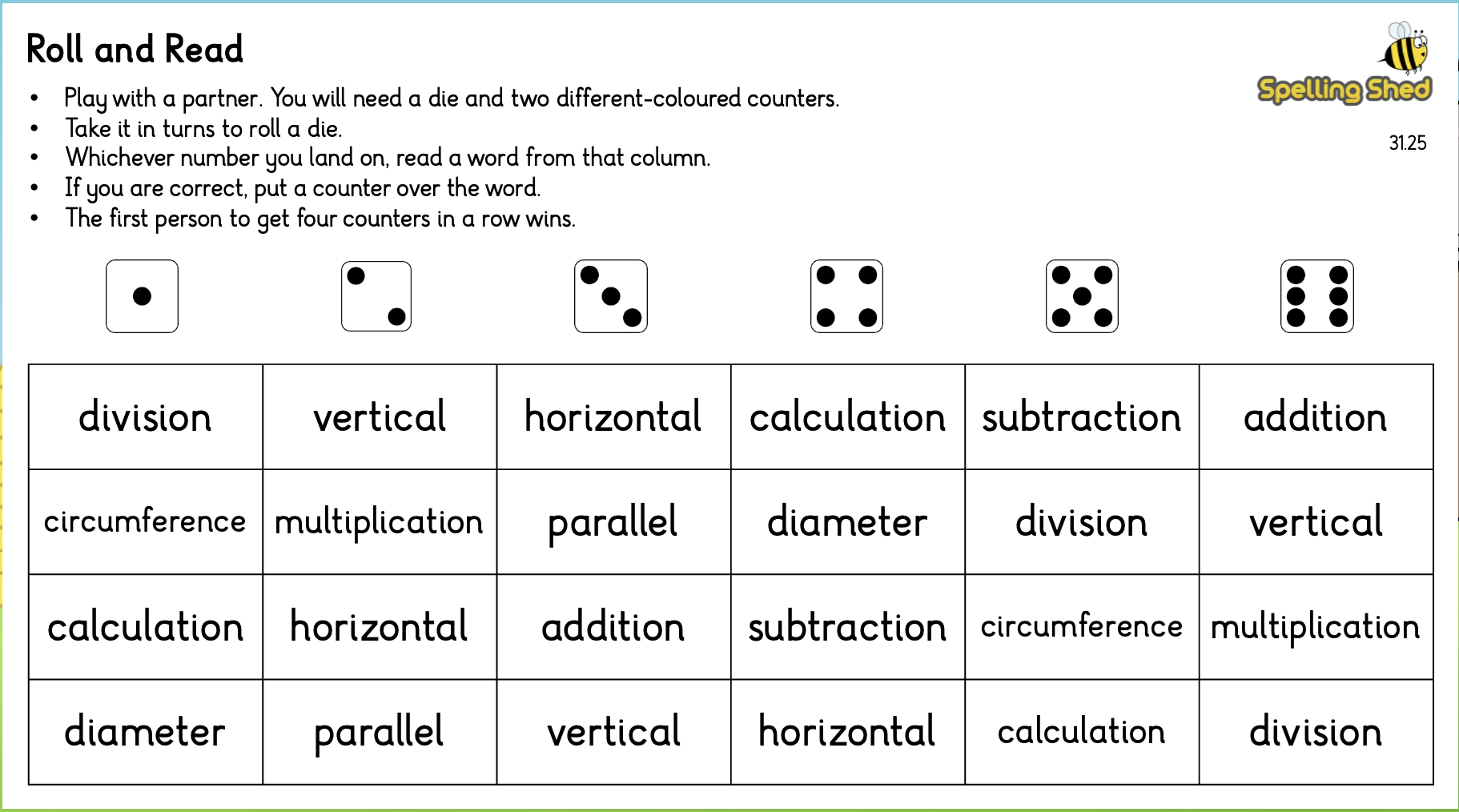
Extra resources are provided to extend or enrich learning. These include a blank Word Shed for exploring a word in depth, a blank Morphology Matrix for investigating related words, and more ‘hands-on’ resources such as Roll and Read game, word cards and sorting mats. These flexible tools support small-group work, intervention or independent exploration.7
Optional Activities
Each lesson has optional daily activities to allow children to regularly engage with their new words. These Stage-appropriate activities have been designed to highlight additional features of the target words, including how many vowels or consonants each word has, adding syllable breaks to the words or creating sentences using given word pairs. These low-pressure activities could be used as ‘morning work’ as the children arrive in the classroom or at another time to suit your timetable.
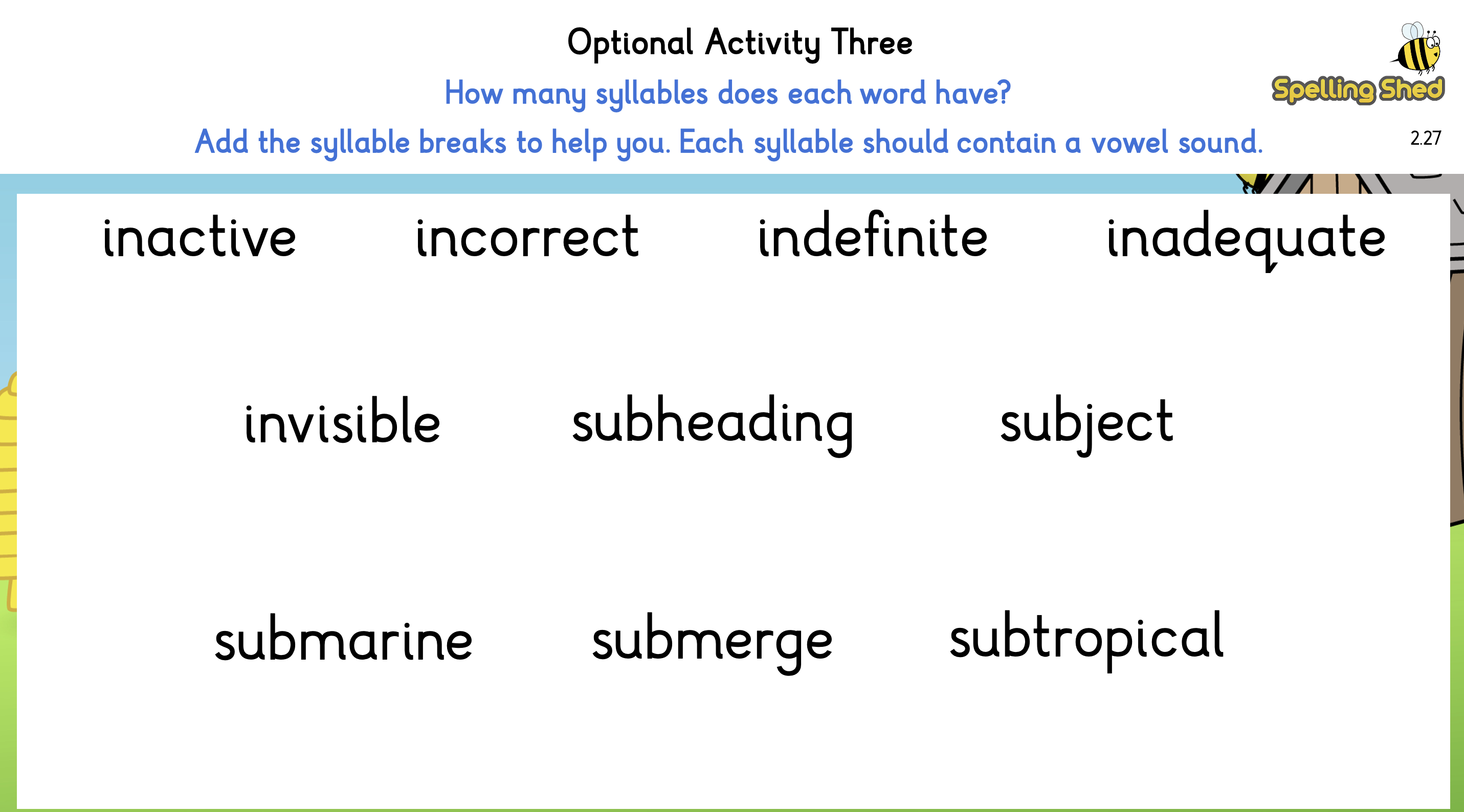
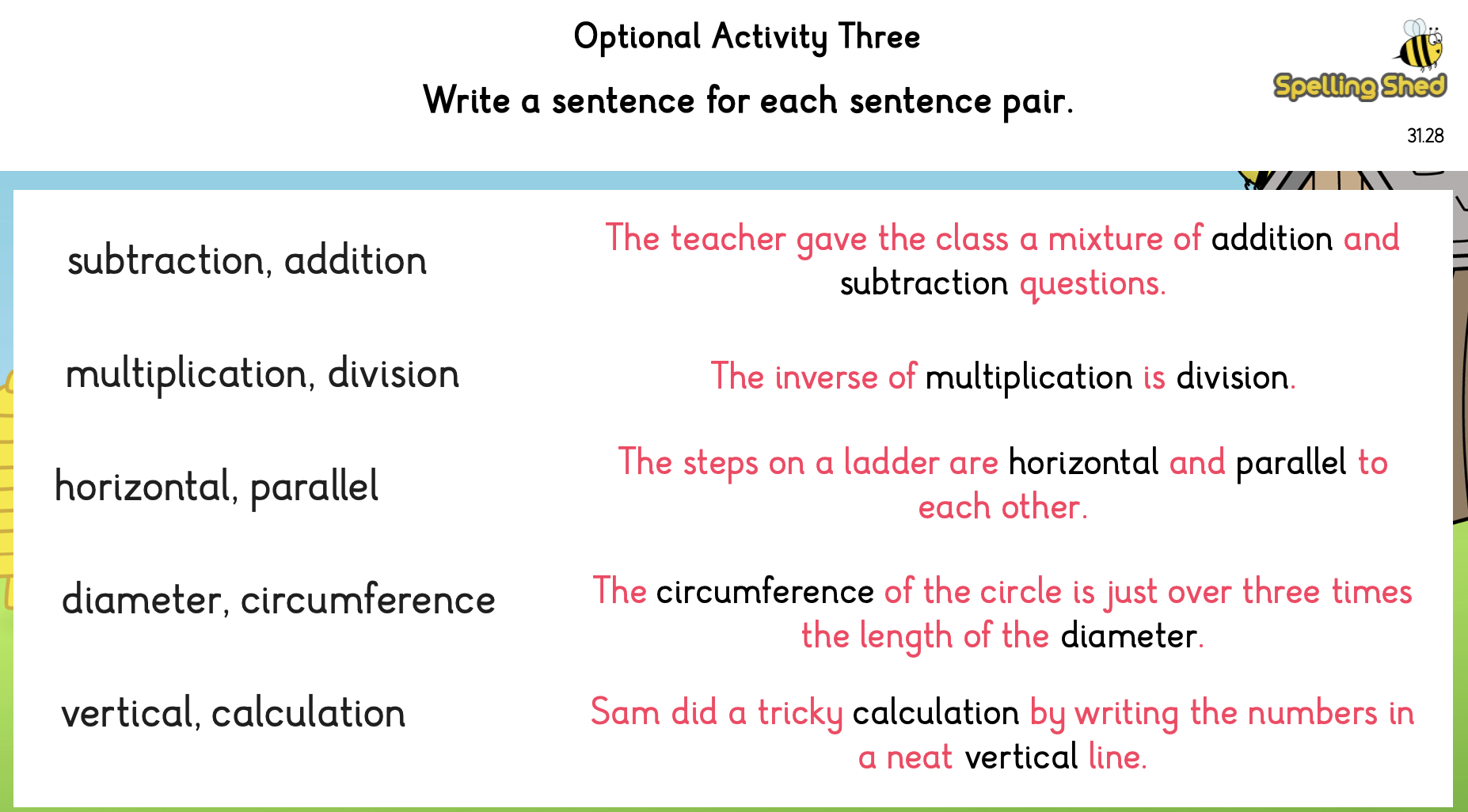
‘Drip-feeding’ each week’s new focus words improves learning and retention by presenting content in smaller, manageable chunks over time, which reduces cognitive overload and allows for better processing and recall.8
Each small encounter with a word or pattern reactivates the traces laid down before, which strengthens them. It also leaves room for curiosity to grow, since a word revisited in a new context often reveals fresh quirks.
References
- Ehri (2014) – Explains how repeated retrieval of words strengthens orthographic mapping.
- Karpicke & Blunt (2011) – Direct evidence that retrieval practice consolidates learning more effectively than restudy alone.
- Moats (2005/2006) – Shows that regular revisiting of previously learned patterns enhances reading and spelling fluency.
- Willingham (2009) – Supports cumulative practice and the role of retrieval in long-term retention.
- Moats (2010) – Emphasises the importance of explicit, systematic language instruction.
- Snow, Griffin & Burns (2005) – Links structured, intentional literacy teaching to strong learning outcomes.
- Adoniou (2016) – Strong advocate for exploring spelling patterns, morphology and word origins.
- Bowers & Bowers (2017) – Key source for structured word inquiry, introducing words through investigation, patterns and meaning.
- Hegland (2023) – Highlights the power of bringing morphology and etymology into early and ongoing teaching.
- Moats (2010) – Clear explanations of phoneme–grapheme correspondences, phonemic awareness and structured teaching.
- Moats (1998) – Supports systematic decoding and explicit phoneme–grapheme mapping.
- Ehri (2014) – Details how phoneme–grapheme mapping leads to stored word representations.
- Snow et al. (2005) – Strong emphasis on responsive instruction matched to learner need.
- Moats (2005/2006) – Shows how application tasks help integrate print, sound and meaning.
- Hegland (2023) – Supports applying morphological skills in reading and spelling tasks.
- Karpicke & Blunt (2011) – Gold-standard research demonstrating the benefits of retrieval practice.
- Willingham (2009) – Explains why revisiting knowledge in varied ways strengthens memory.
- Moats (2005/2006) – Supports ongoing review to stabilise word knowledge.
- Bowers & Bowers (2017) – Foundational text for structured word inquiry, matrices and family-based investigation.
- Adoniou (2016) – Advocates exploring word parts and histories to deepen understanding.
- Hegland (2023) – Strong evidence for explicit morphological and etymological study improving spelling and vocabulary.
- Retrieval practice benefits for spelling performance in fifth-grade children — This is an empirical study showing that retrieval practice (i.e. recalling spellings rather than copying) produces better long-term spelling performance. PubMed.